Hello, this is Goyang Shinsegae Eye Clinic.
If you are considering vision correction surgery because of the inconvenience of wearing glasses or contact lenses, you may find yourself deciding between SMILE and 2-Day LASEK.
These procedures differ in how they are performed and in the technology they use, so it is important not to compare them based on a single feature alone. Instead, the overall condition of the eyes should be carefully evaluated.
In addition to visual acuity, factors such as corneal thickness and shape, the degree of myopia and astigmatism, and pupil size should be assessed before determining an appropriate vision correction plan for each patient.
Today, we will take a closer look at the differences between these two procedures, the key features of the AMARIS RED excimer laser system, residual corneal thickness, and the recovery process.
1. SMILE vs. 2-Day LASEK: What Are the Differences?
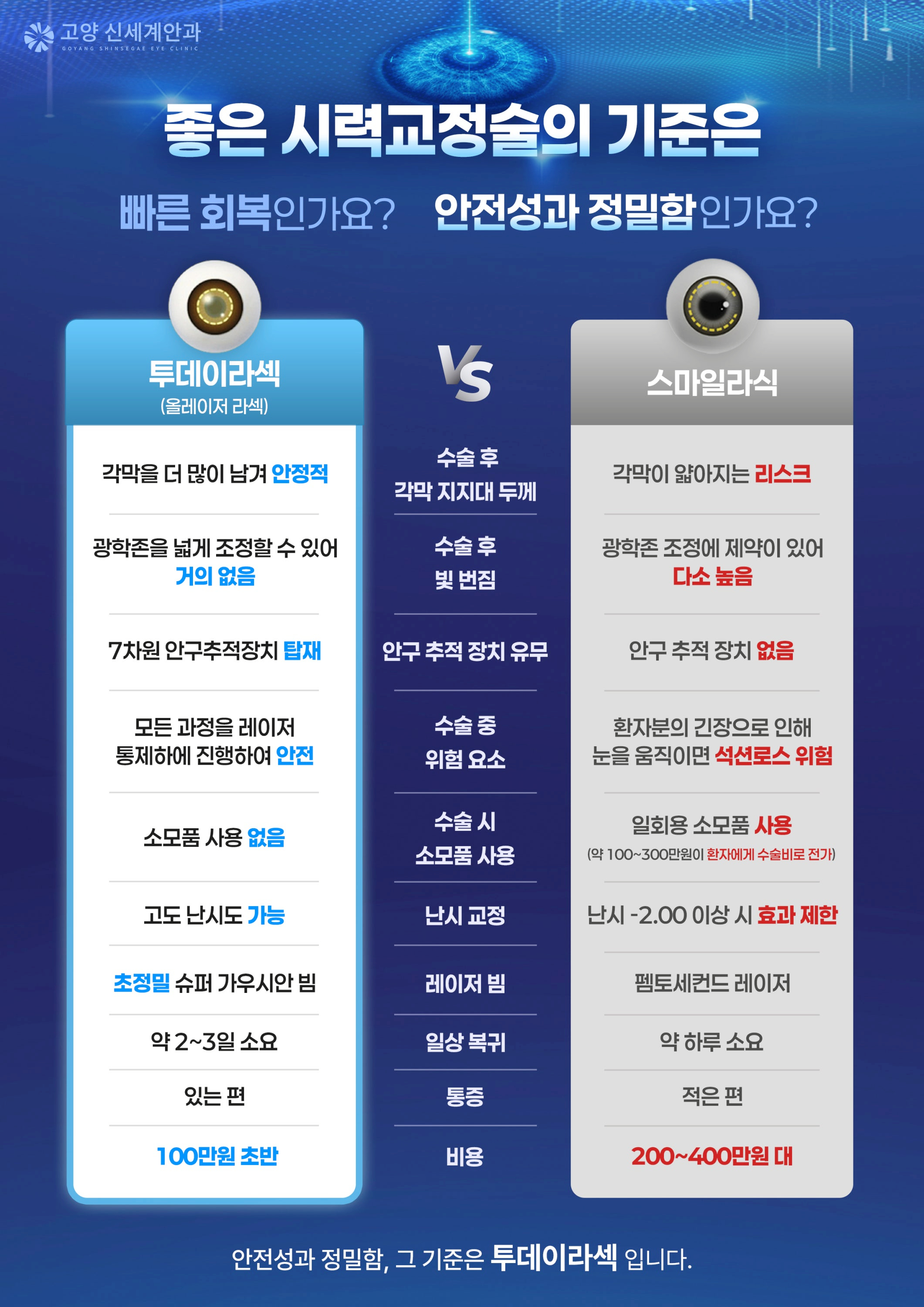
✔ Amount of Corneal Tissue Removed & Risk of Halos
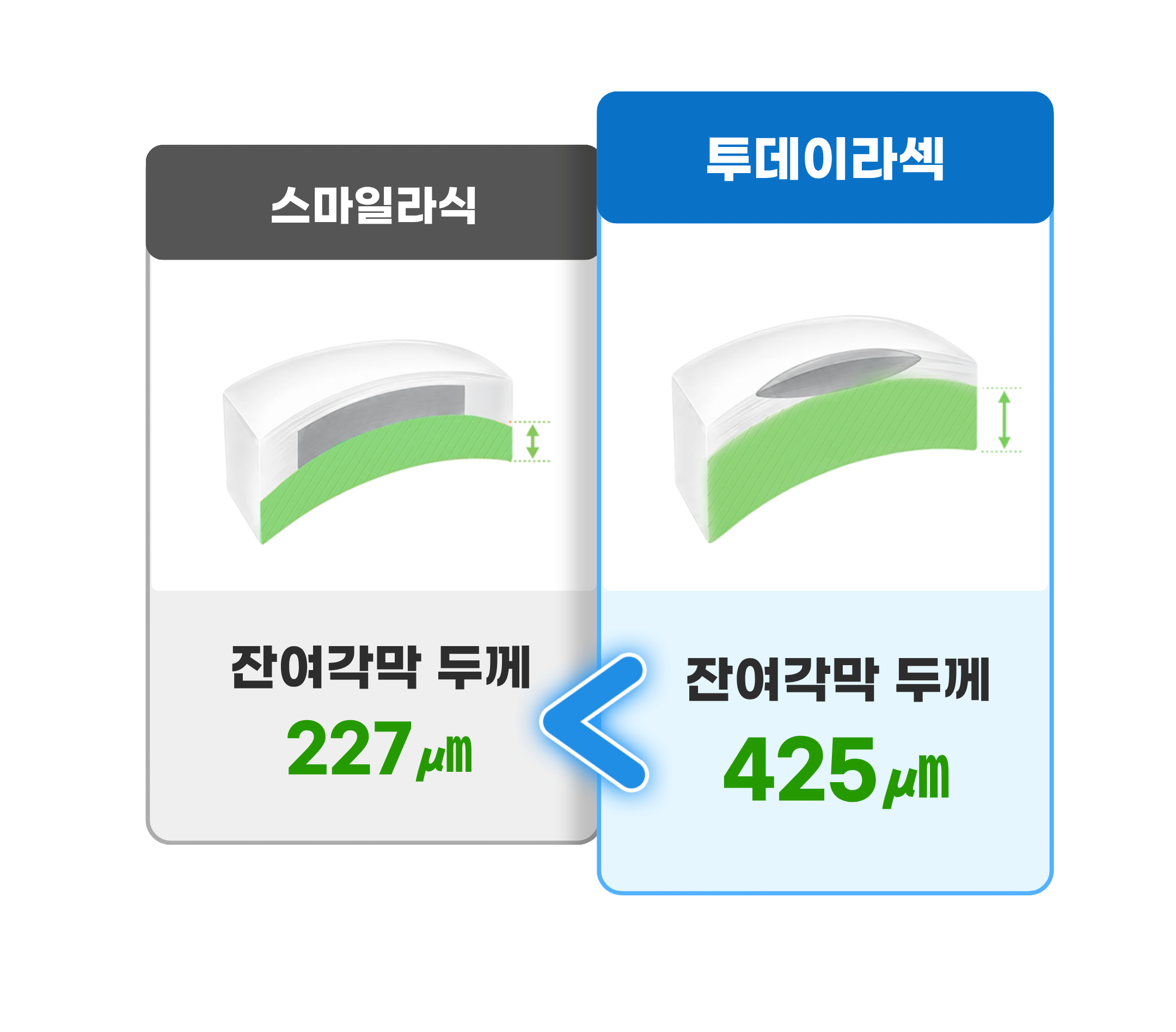
2-Day LASEK can preserve more of the cornea's structural tissue after surgery, which may help reduce the risk of secondary complications such as corneal ectasia associated with excessive weakening of the cornea.
In comparison, SMILE may leave a thinner supporting stromal structure than surface ablation procedures such as LASEK, which may result in a relatively different biomechanical risk profile.
Corneal ectasia: A condition in which the cornea becomes structurally weakened and progressively protrudes after corneal refractive surgery such as LASIK or SMILE.
✔ Intraoperative Stability & Decentration
In both LASIK, including SMILE, and LASEK, accurate centration of the treatment zone—typically around 6 mm in the central cornea—is important.
However, even when a patient is asked to look steadily at a fixation target, small eye movements can occur during surgery because of tension or involuntary motion.
For this reason, many excimer laser systems are equipped with eye-tracking technology. The eye tracker continuously monitors eye movement and helps keep laser treatment aligned with the intended corneal treatment zone.
SMILE, however, does not use the same active eye-tracking system during lenticule creation. Instead, the eye is stabilized using a suction interface.
If the patient moves the eye significantly or if suction is lost during the procedure, a condition known as “suction loss” can occur.
Some reports have described suction loss occurring in a small percentage of SMILE procedures.
This is one of the intraoperative factors that may need to be considered when comparing different refractive surgery techniques.
With 2-Day LASEK, the treatment process is performed under laser guidance, whereas SMILE also involves manual separation and removal of the lenticule. This introduces a different set of procedure-specific risks, including irregular lenticule dissection or other stromal complications.
✅ Astigmatism Correction
2-Day LASEK may be considered for a wide range of refractive errors, including higher degrees of myopia and astigmatism.
With SMILE, the degree of astigmatism that can be treated may be limited depending on the platform, treatment parameters, and individual eye characteristics.
✅ Halos and Night Vision Symptoms
With 2-Day LASEK, the optical zone can be adjusted according to factors such as pupil size and treatment design.
In SMILE, there may be more limitations in modifying the optical zone, which can influence the possibility of postoperative halos or glare.
✅ Cost of Surgery
The cost of 2-Day LASEK may begin in the lower KRW 1 million range, whereas SMILE procedures may cost approximately KRW 2–4 million depending on the medical institution and surgical platform.
One reason SMILE may be more expensive is that it requires a single-use patient interface and other procedure-specific consumables.
The cost of these disposable components varies according to the equipment and platform used and may contribute to the overall surgical fee.
In comparison, 2-Day LASEK generally involves lower disposable equipment costs, which may result in a lower overall procedure fee.

2. What Are the Key Features of the AMARIS RED?
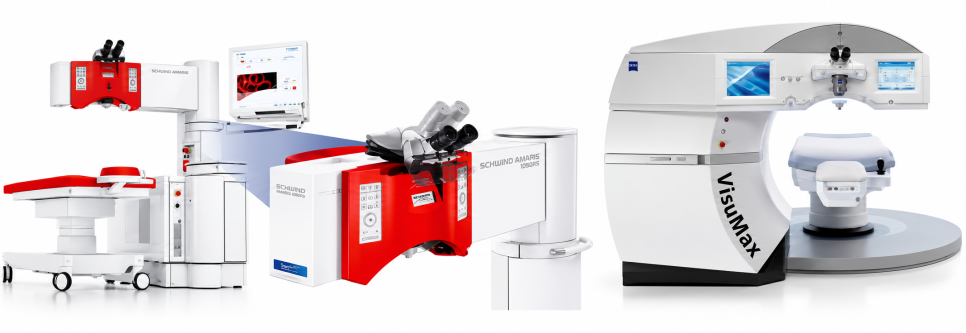
At our Daehwa Station eye clinic, the AMARIS RED system is used when performing 2-Day LASEK.
AMARIS RED is an excimer laser platform designed to deliver laser energy to selected areas of the cornea according to the patient's refractive error and the planned amount of correction.
One of its key features is a 7-dimensional eye-tracking system.
Even when a patient is looking at a fixed target, the eye can make subtle involuntary movements. The tracking system monitors these movements in real time and helps ensure that laser energy is delivered to the intended treatment area.
The system also incorporates real-time pachymetry, allowing corneal thickness changes to be monitored during the procedure and helping the surgeon assess the depth of laser ablation as treatment progresses.
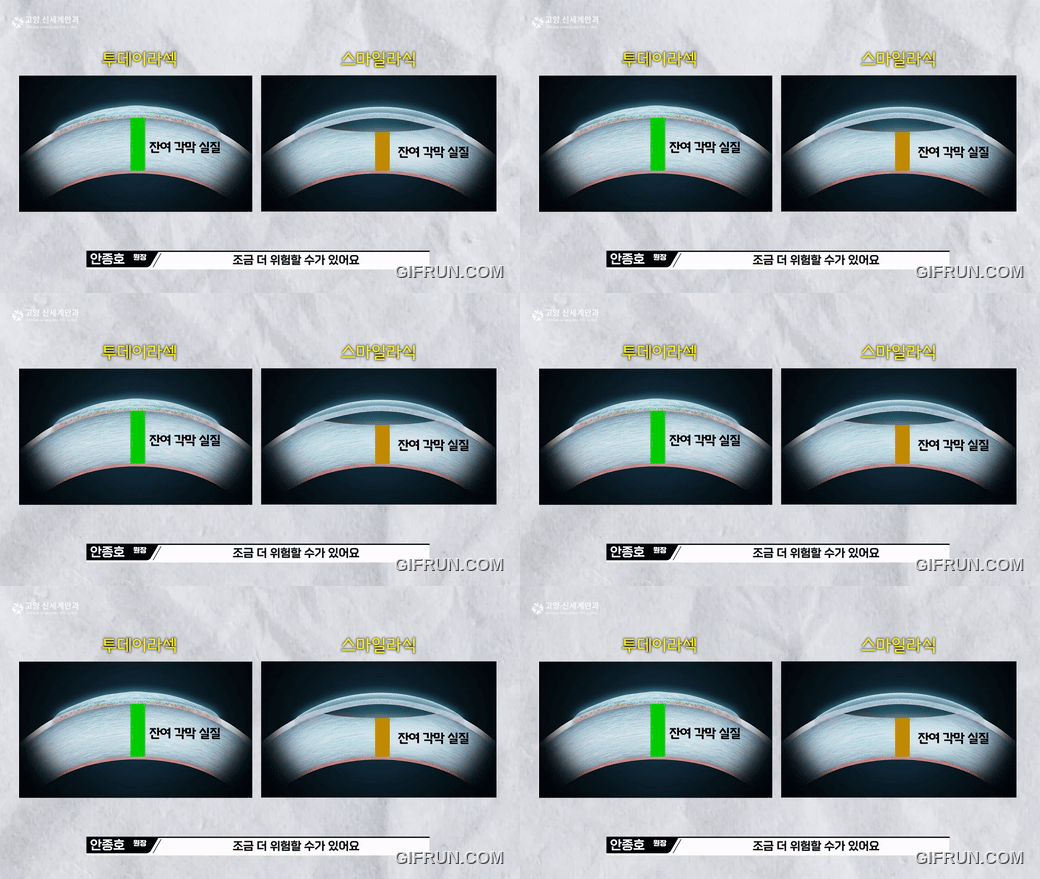
3. Why Is Residual Corneal Thickness Important?
Because laser vision correction reshapes the cornea by removing a calculated amount of tissue, it is important to determine how much corneal tissue will remain after surgery.
Residual corneal thickness refers to the amount of corneal tissue remaining after the procedure.
This value can vary depending on the surgical technique, the patient's original corneal thickness, and the amount of refractive correction required.
Under the same comparison conditions, the residual corneal thickness has been described as approximately 227 μm after SMILE and 425 μm after 2-Day LASEK.
However, rather than comparing these figures alone, it is important to undergo a comprehensive preoperative examination to assess the current corneal structure and estimate the expected residual thickness before selecting a surgical method.

4. An All-Laser Approach
In conventional LASEK, alcohol or a surgical brush may be used during epithelial removal, which can cause chemical or mechanical stimulation of the corneal surface.
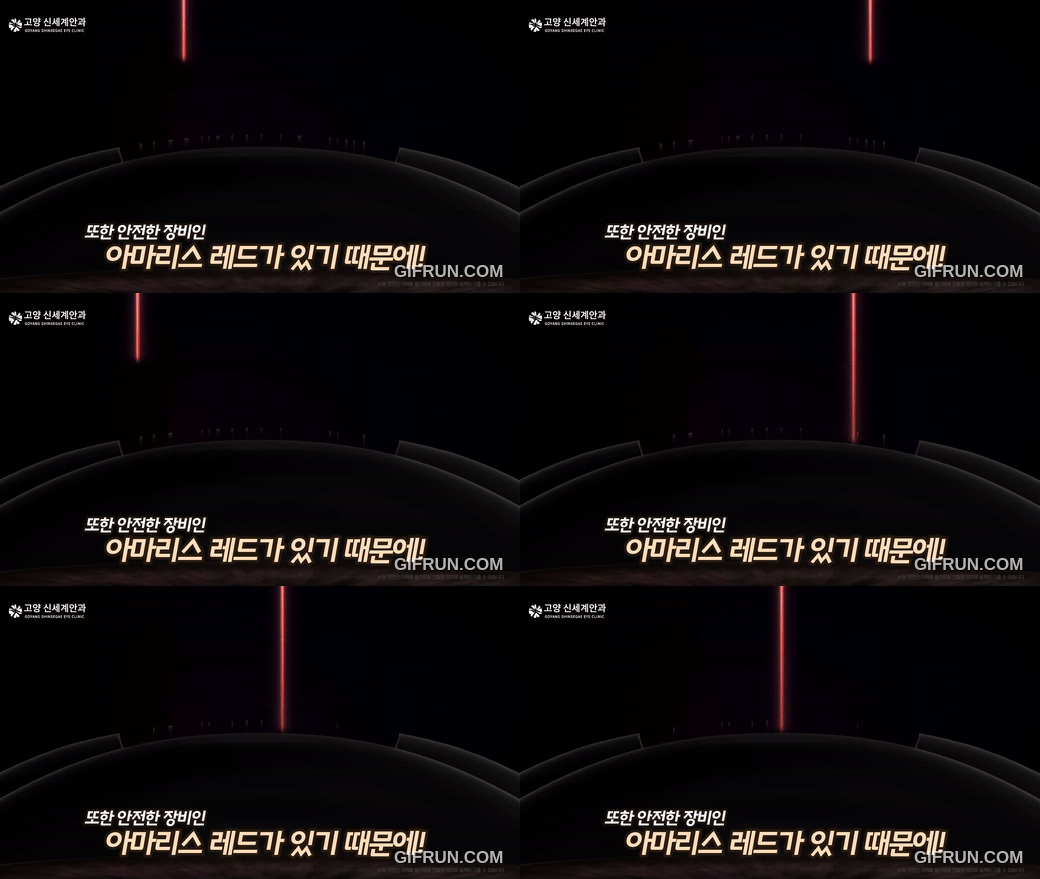
In contrast, all-laser LASEK using the AMARIS RED can use laser energy from epithelial removal through refractive correction, helping reduce unnecessary physical contact with the cornea.
Another feature of the system is its small 0.54 mm laser spot size, which is designed to allow precise delivery of laser energy to the targeted area.
For patients considering a surface ablation procedure using a highly precise laser platform, these are some of the technical features of the AMARIS RED that may be worth reviewing.
SMILE and 2-Day LASEK differ in both their surgical techniques and clinical characteristics.
A laser platform such as the AMARIS RED also offers various functions that can support the vision correction process, but the choice of procedure should not be based on the equipment alone.
Even among patients considering LASEK, individual factors such as the degree of myopia or astigmatism, pupil size, corneal thickness, corneal shape, and the presence of dry eye can vary considerably.
For this reason, it is more important to first understand the condition of your own eyes through a comprehensive examination rather than focusing only on the advantages, disadvantages, or cost of a particular procedure.
If you are considering vision correction surgery in the Ilsan area, a detailed eye examination and consultation with an ophthalmologist can help determine which procedures may be suitable for you and what type of recovery process you can expect.
Thank you.