
Hello, this is Goyang Shinsegae Eye Clinic.
When numerous black spots or floaters suddenly appear in your vision or you repeatedly see flashes of light, you may initially assume that they are caused by ordinary eye floaters or eye strain.
However, if these symptoms are accompanied by a dark shadow in part of your visual field or a sensation similar to a curtain being drawn across your vision, you should undergo an eye examination promptly.
These changes may indicate that the retina, the light-sensitive nerve tissue lining the inside of the eye, is becoming detached from its normal position.
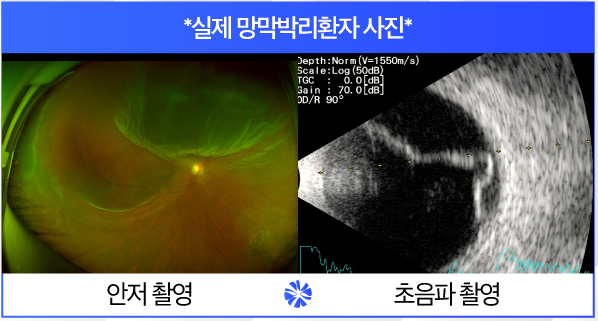
As the detached area expands and reaches the macula, which is responsible for central vision, the visual prognosis may be affected.
If you are concerned about emergency surgery for retinal detachment, you should not decide on your own whether it is safe to wait several days. The priority is to determine the extent of the detachment and whether the macula is involved.
Today, we will explain which symptoms require prompt medical attention, what examinations may be performed, and how the appropriate treatment is determined.
1) Why Is Retinal Detachment Considered an Ophthalmic Emergency?
The retina is a layer of nerve tissue that receives light entering the eye and converts it into visual information.
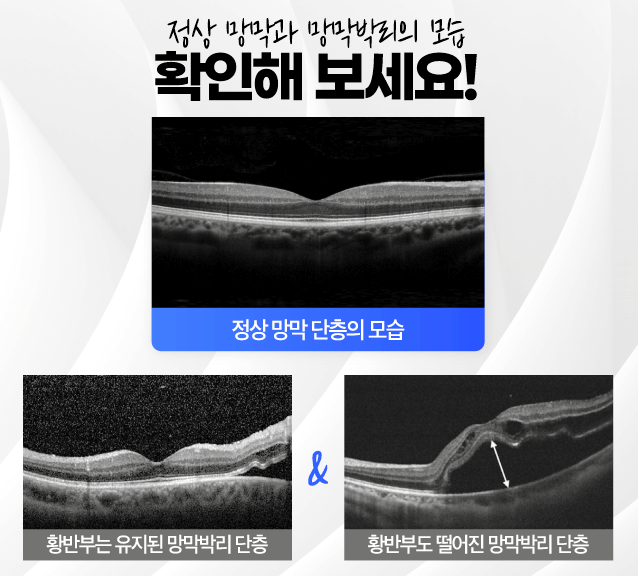
It normally remains attached to the inner wall of the eye. However, if a hole or tear develops, fluid may pass through the opening and collect underneath the retina.
When this causes the retina to separate from the tissue beneath it, the condition is known as rhegmatogenous retinal detachment.
The main concern is that even if the detachment begins in the peripheral retina, it may gradually spread.
If it reaches the macula, which is responsible for detailed central vision, the final visual outcome may be affected. This is why the timing of treatment must be assessed carefully.
The need for emergency retinal detachment surgery is not determined solely by the severity of the symptoms.
The location and extent of the detachment, whether the macula is involved, and the number and position of retinal tears are all considered when determining the appropriate treatment and timing.

2) Which Symptoms Require an Immediate Eye Examination?
A retinal problem does not always begin with severe pain.
Visual changes may occur without any noticeable discomfort, so it is important to recognize the following warning signs:
✔ A sudden increase in black spots or floaters
✔ Repeated flashes of light, known as photopsia
✔ A shadow appearing in one part of the visual field
✔ A dark curtain or veil covering part of the vision
✔ A gradually narrowing field of vision
✔ Sudden loss of vision or blurred central vision
Floaters or flashes of light do not always indicate retinal detachment.
However, if these symptoms begin suddenly or the number and pattern of existing floaters change rapidly, an examination may be needed to check for a retinal tear or another abnormality.
If part of your vision becomes obscured, it is important to seek prompt ophthalmic care instead of waiting to see whether the symptom resolves on its own.

3) What Examinations Are Performed Before Emergency Retinal Detachment Surgery?
Before determining whether surgery is necessary, the ophthalmologist must identify where and to what extent the retina has detached.
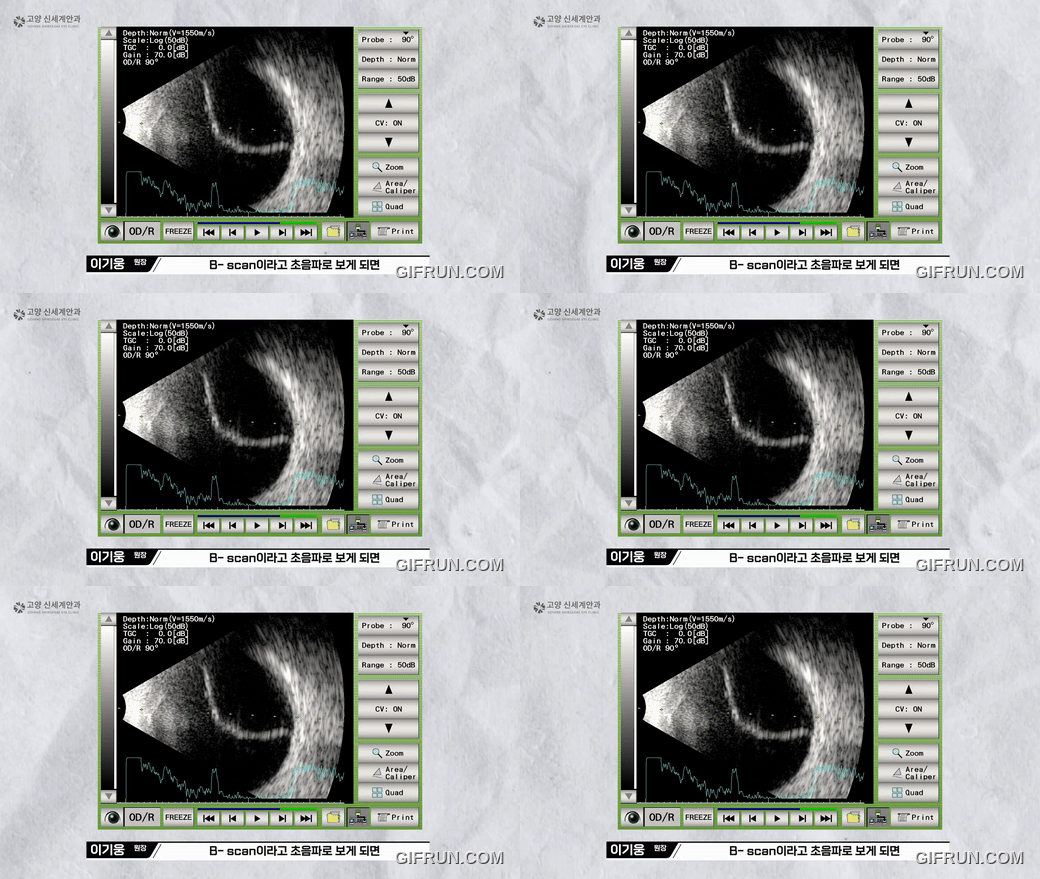
A dilated fundus examination is generally performed first. Depending on the condition of the eye, ultra-widefield retinal imaging, optical coherence tomography (OCT), or B-scan ultrasonography may also be used.
| Examination | What It Evaluates |
| Dilated fundus examination and ultra-widefield retinal imaging | he location of retinal tears and abnormalities in the peripheral retina |
| OCT | The structure of the macula and central retina |
| B-scan ultrasonography | Internal eye structures when the retina cannot be viewed clearly |
One of the most important factors is whether the macula is involved.
Because the macula is responsible for central and detailed vision, its condition is an important consideration when planning treatment and assessing the potential visual prognosis.
The surgical approach is not selected based on the diagnosis alone. Treatment is determined after carefully evaluating the exact location and extent of the retinal detachment.
4) Does Every Retinal Tear Require Surgery?
A retinal tear or hole should be distinguished from a retinal detachment that has already developed around it.
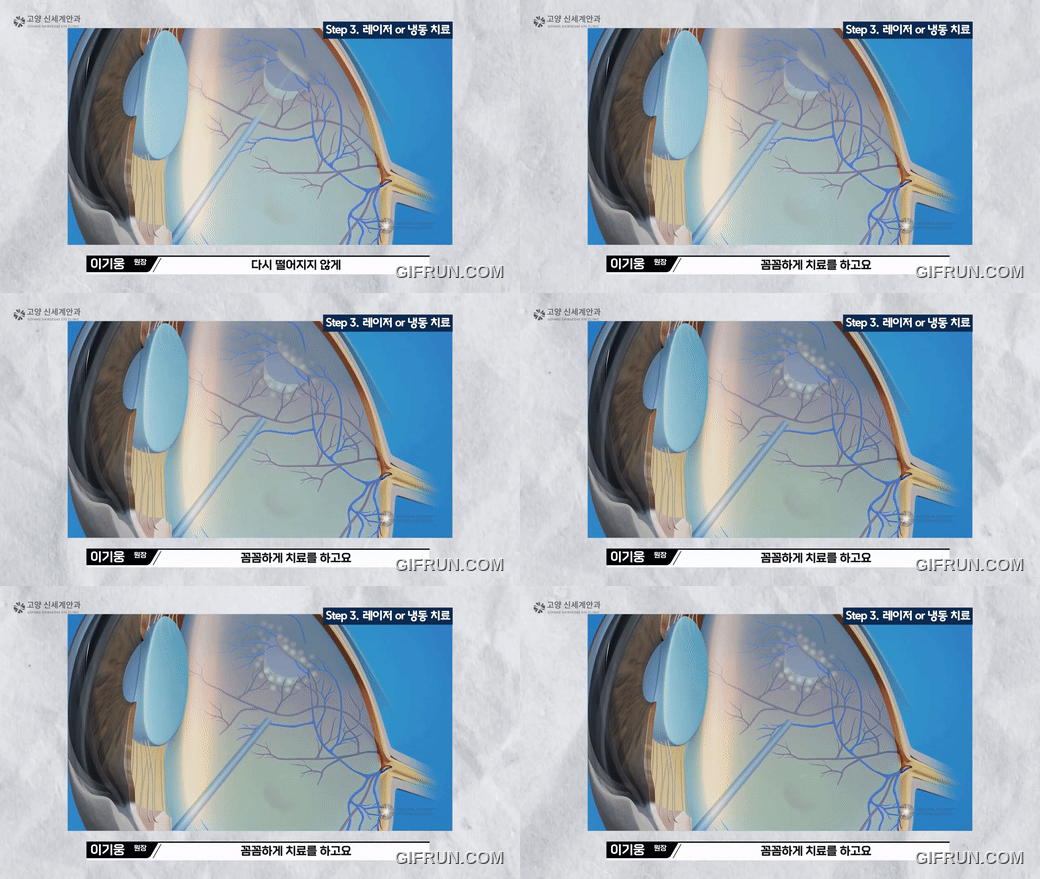
If a tear or hole is detected before the surrounding retina becomes detached, laser photocoagulation may be considered to seal the area around the tear and reduce the risk of further progression.
If fluid has passed through the tear and caused the retina to detach, surgical treatment may be necessary.
Common surgical options include vitrectomy and scleral buckling.
The appropriate procedure is selected after considering factors such as the patient’s age, lens condition, location and number of retinal tears, and extent of the detachment.
During vitrectomy, the vitreous gel pulling on the retina is removed. The retinal tear is then treated, and gas or silicone oil may be placed inside the eye to help the detached retina return to its proper position.
For this reason, emergency surgery for retinal detachment is not performed using the same method in every patient.

5) Q&A: Common Questions Before Emergency Retinal Detachment Surgery
Q. Can retinal detachment occur without eye pain?
Yes. Retinal detachment can occur without noticeable pain. It is important to watch for sudden floaters, flashes of light, shadows, or areas of vision that become obscured.
Q. Does the appearance of floaters mean that emergency surgery is necessary?
No. Floaters can have several causes, and not every case is associated with a retinal tear or detachment.
However, if the number of floaters suddenly increases or they occur together with flashes of light or visual field loss, a dilated retinal examination may be needed to identify the cause.
Q. Is immediate surgery required if a retinal hole is found?
It depends on whether there is only a retinal tear or hole or whether the surrounding retina has already begun to detach.
Laser treatment may be considered before detachment develops. If retinal detachment has already occurred, surgery may be required depending on its location and extent.
When considering emergency surgery for retinal detachment at a Goyang eye clinic, it is important not to judge the urgency of the condition solely by how severe the symptoms feel.
The condition may progress even without significant pain. If the area of obscured vision is expanding, a prompt examination is necessary.
During the examination, the ophthalmologist evaluates the location of any retinal tears, the extent of the detachment, and the condition of the macula. Based on these findings, the need for laser treatment or surgery is determined.
If you suddenly notice a significant increase in floaters, repeated flashes of light, or a shadow covering one side of your vision, do not wait too long to see whether the symptoms improve. Seek prompt ophthalmic care to identify the cause.
Thank you.