Hello, this is Goyang Shinsegae Eye Clinic, an ophthalmology clinic in Ilsan.
After the age of 40, many people visit an eye clinic with concerns such as, “I can’t read the text on my phone clearly,” or “I can see distant objects well, but I have to hold books farther away to read them.”
However, difficulty seeing nearby objects does not feel the same for everyone. The symptoms may vary depending on whether a person already has myopia or hyperopia.
Today, based on questions we frequently receive during consultations, we will explain the presbyopia treatment options that may be considered by those who feel uncomfortable about undergoing surgery.
Q1. Does difficulty seeing nearby objects always mean presbyopia?
Many patients ask questions such as:
“Can difficulty seeing distant objects also be related to presbyopia?”
“Does needing reading glasses automatically mean I have presbyopia?”
“I can see nearby objects better when I take off my glasses. Is that also presbyopia?”
In short, all of these changes may occur as presbyopia progresses.
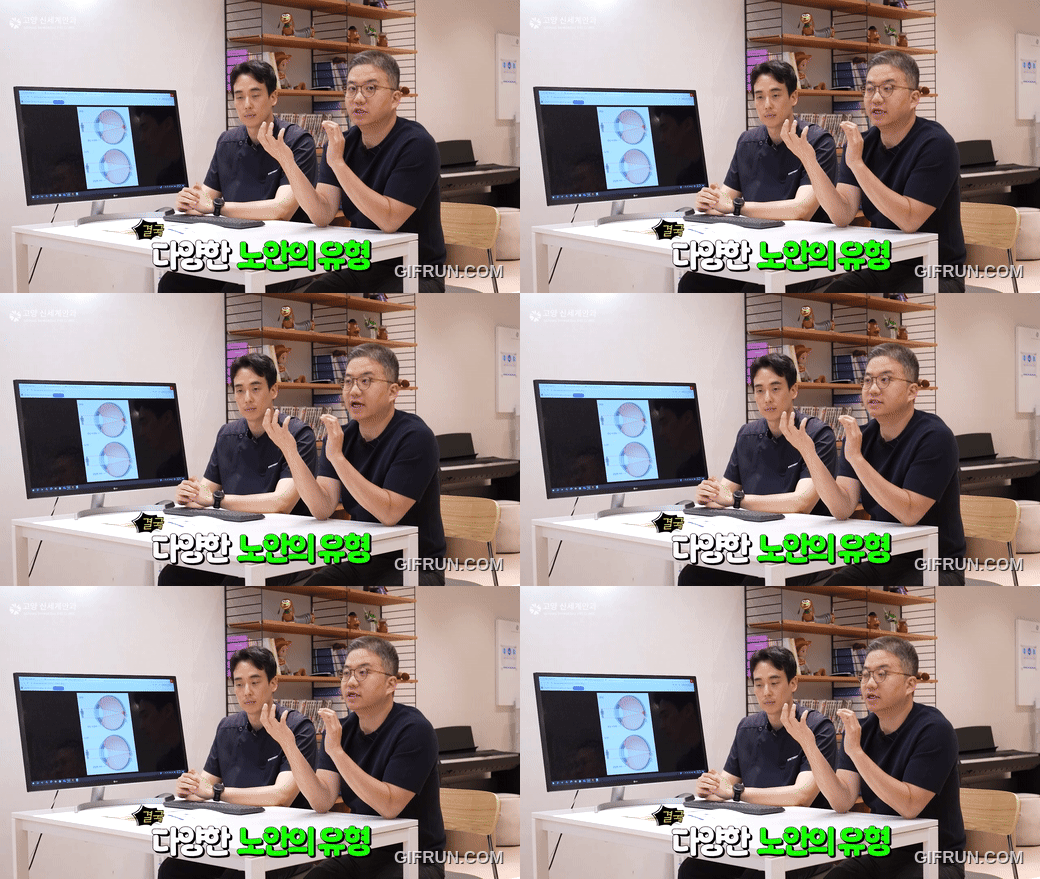
Presbyopia does not refer to just one specific symptom. It is a natural age-related process in which the crystalline lens gradually loses its ability to adjust focus.
Normally, the lens becomes thicker when viewing nearby objects and thinner when viewing distant objects, allowing the eyes to focus at different distances.
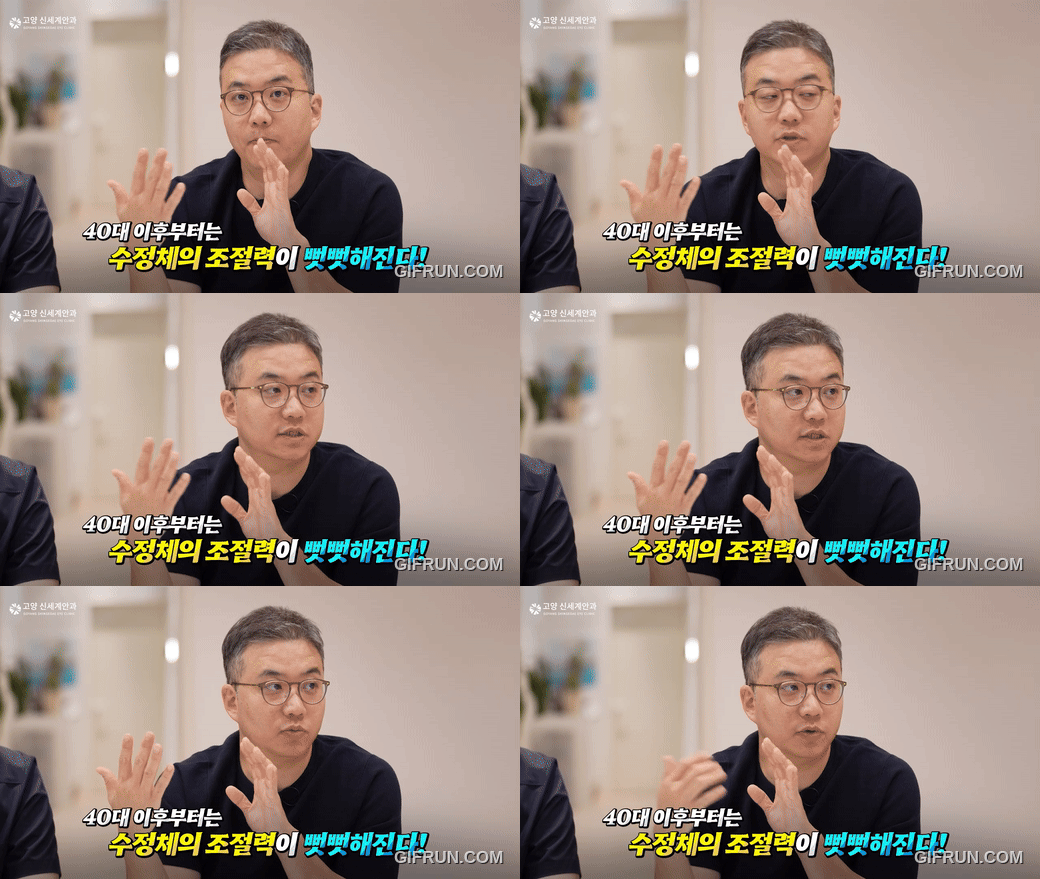
From the age of 40 onward, however, the lens gradually loses its flexibility. As a result, the ability to shift focus quickly between near and far distances declines.
Some people may find small print blurry, while others may see nearby text more clearly after removing their glasses. Others may begin to need reading glasses. Symptoms can therefore vary considerably.
Because these changes differ according to each person’s refractive condition, it is important to undergo a detailed eye examination at an ophthalmology clinic in Ilsan.
Q2. Why do symptoms vary from person to person?
The discomfort caused by presbyopia can differ depending on a person’s pre-existing refractive error.
People with myopia may find that nearby text becomes clearer when they remove their usual glasses.
In contrast, people with hyperopia may have greater difficulty focusing at close range and may require reading glasses earlier.
In other words, age-related loss of focusing ability occurs alongside pre-existing myopia or hyperopia, which is why symptoms can appear differently.
Rather than relying solely on information found online, it is advisable to have your current vision and lens condition examined at an ophthalmology clinic in Ilsan Seo-gu before choosing an appropriate presbyopia treatment.
Q3. What options are available if I am hesitant about surgery?
✔ 1. Reading glasses
Reading glasses are one of the simplest ways to improve vision when reading books or using a smartphone at close range.
However, the required prescription varies from person to person. It is advisable to undergo an accurate vision test instead of purchasing reading glasses based on an estimated prescription.
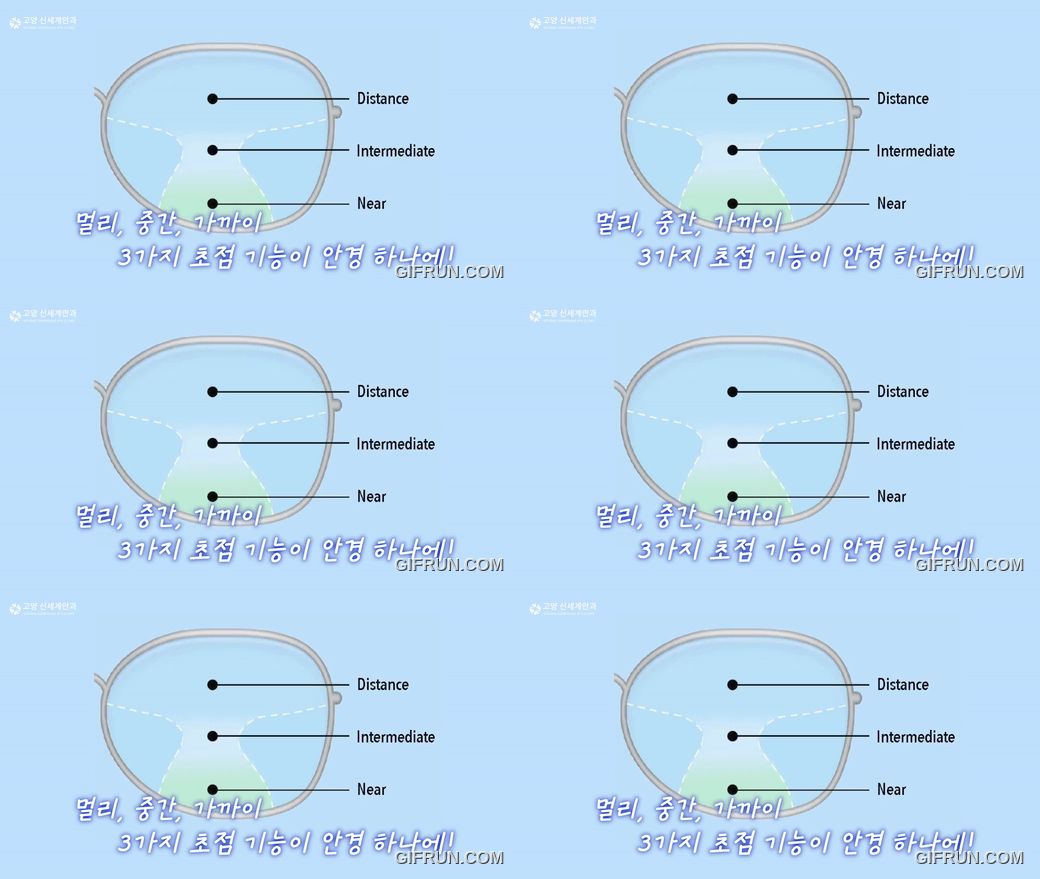
✔ 2. Progressive multifocal glasses
Progressive multifocal glasses are designed to provide vision at far, intermediate, and near distances through a single pair of glasses.
They reduce the need to switch between several pairs of glasses. However, some people may initially experience dizziness or find eye and head movements unfamiliar.
An adjustment period may also be necessary when walking up or down stairs or driving. Your occupation and daily routine should therefore be considered when selecting a presbyopia treatment.
Q4. Can prescription eye drops help?
Recently, there has been growing interest in presbyopia eye drops containing pilocarpine.
These drops temporarily constrict the pupil, increasing the range over which objects appear in focus and helping improve near vision.
However, the degree and duration of the effect vary between individuals, and the drops are not suitable for everyone.
They may cause unexpected symptoms such as headaches, eye strain, or difficulty seeing in dimly lit environments. For this reason, they should only be used as prescribed after an examination at an ophthalmology clinic in Ilsan Seo-gu.
Depending on the condition of your eyes, another presbyopia treatment may be more appropriate. A decision should therefore be made after a thorough consultation with an eye-care professional.
Q5. Which presbyopia treatment is the best?
The best option is not one particular treatment for everyone, but the method most suited to the individual’s eye condition and lifestyle.
For some people, reading glasses may be sufficient to reduce inconvenience. Others may find progressive multifocal glasses more comfortable.
Prescription eye drops or multifocal contact lenses may also be helpful in certain cases. If non-surgical options do not provide sufficient improvement, surgical treatment may then be considered.
It is important to evaluate not only the degree of presbyopia but also the presence of myopia, hyperopia, or cataracts, as well as the patient’s occupation, driving frequency, and amount of time spent using a smartphone.
Q6. Is presbyopia-correcting cataract surgery suitable for every patient?
When selecting a multifocal intraocular lens, both the patient’s occupation and lifestyle are important. The condition of the eyes must also be carefully assessed.
✅ Eye conditions that may not be suitable for a multifocal intraocular lens
◼ A high degree of irregular corneal astigmatism
◼ Retinal conditions such as macular degeneration
◼ A weakened optic nerve due to glaucoma or another condition
◼ Pupils that are excessively large or small
◼ Severe dry eye syndrome
In these situations, a multifocal intraocular lens may not perform as intended, which can lead to lower satisfaction after surgery.
If you are considering presbyopia-correcting cataract surgery, it is important to consult an ophthalmologist who fully understands these factors and takes a careful, conservative approach when determining whether surgery is appropriate.

Q7. Can presbyopia also be corrected with contact lenses?
In addition to glasses, contact lenses may also be used to correct presbyopia.
A suitable lens can be selected according to the individual’s vision and lifestyle. Common options include the following:
| Correction | method Features |
| Multifocal contact lenses | Designed to provide both distance and near vision through a single lens |
| Monovision | One eye is corrected for distance vision and the other for near vision |
| Monovision combined with multifocal lenses | Combines both approaches to accommodate the individual’s vision and daily needs |
These methods do not provide the same level of satisfaction for everyone. Adaptation may vary depending on the individual’s vision and ocular characteristics.
People who have previously undergone LASIK or LASEK, or who have severe dry eye syndrome, may also experience foreign-body sensation or discomfort while wearing contact lenses.
A thorough eye examination is therefore necessary before wearing contact lenses to determine whether they are suitable.
Presbyopia is a natural age-related change that can affect anyone.
However, you do not have to tolerate the inconvenience, nor do you need to choose surgery from the outset.
Several non-surgical options are available, including reading glasses, progressive multifocal glasses, prescription eye drops, and contact lenses. The most appropriate option will vary depending on the condition of each person’s eyes.
If you have difficulty reading small print or experience eye strain when shifting focus between near and far distances, consider undergoing a comprehensive examination at an ophthalmology clinic in Ilsan Seo-gu rather than trying to determine the cause on your own.
Thank you.