Hello, this is Goyang Shinsegae Eye Clinic.
After being diagnosed with cataracts, one of the most common questions people have when searching for a recommended eye clinic in Gimpo concerns the choice of intraocular lens.
In the past, a “mix-and-match” approach was sometimes used. This involved implanting a lens optimized for distance vision in one eye and a lens designed to support near vision in the other.
Multifocal intraocular lenses have continued to evolve, however, and newer products are now designed to provide a broader range of vision—from far to intermediate and near distances—using the same lens design.
What has changed compared with earlier lenses? If you are preparing for cataract surgery in Gimpo, here is what you should know about recent developments in multifocal intraocular lenses.

Q1. What Is the Mix-and-Match Approach?
Mix and match refers to implanting intraocular lenses with different optical characteristics in each eye.
During cataract surgery, the cloudy natural lens is removed and replaced with an artificial intraocular lens.
Several types of intraocular lenses are available, including monofocal, extended-depth-of-focus, and multifocal lenses. Each type has its own advantages and limitations.
By implanting lenses with different functions in the two eyes, the mix-and-match approach aims to allow each lens to compensate for the limitations of the other.
Is Mix and Match Still Commonly Used?
It is used less frequently than it was in the past.
Earlier multifocal lenses did not always provide satisfactory vision across all distances. For this reason, different lens types were sometimes combined to broaden the patient’s overall range of vision.
More recent multifocal intraocular lenses have been developed to support distance, intermediate, and near vision with a single lens design. As a result, the need to combine different lenses has decreased.
However, the same approach is not suitable for every patient. At a Gimpo eye clinic, the choice of lens should be based on the condition of the eyes, lifestyle, occupation, and individual visual needs.
Q2. How Have the Latest Multifocal Lenses Changed?
Multifocal intraocular lenses are designed to provide functional vision at both far and near distances.
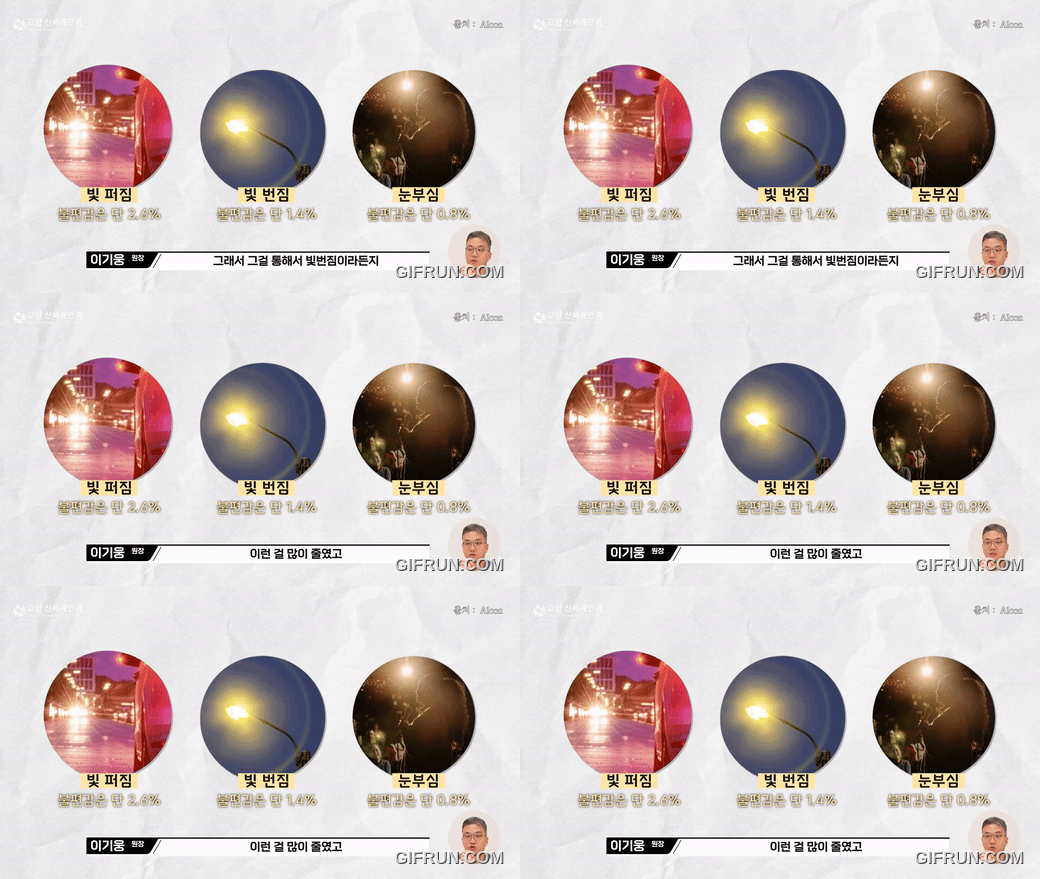
Earlier products offered the advantage of supporting vision at multiple distances, but some patients found nighttime glare or halos bothersome or felt that their distance vision was less clear than expected.
Newer lenses have been developed to address these limitations.
Recent designs aim to reduce unwanted light scatter and provide a smoother transition between distance, intermediate, and near vision. As more products with different optical characteristics have become available, patients now have a wider range of options.
Each lens still has its own features, and the most appropriate choice may vary depending on the patient’s eye condition and lifestyle.
If you are planning cataract surgery in Gimpo, it is important to receive a detailed explanation of each lens before making a decision.
Q3. What Are the Features of Odyssey and PanOptix Pro?
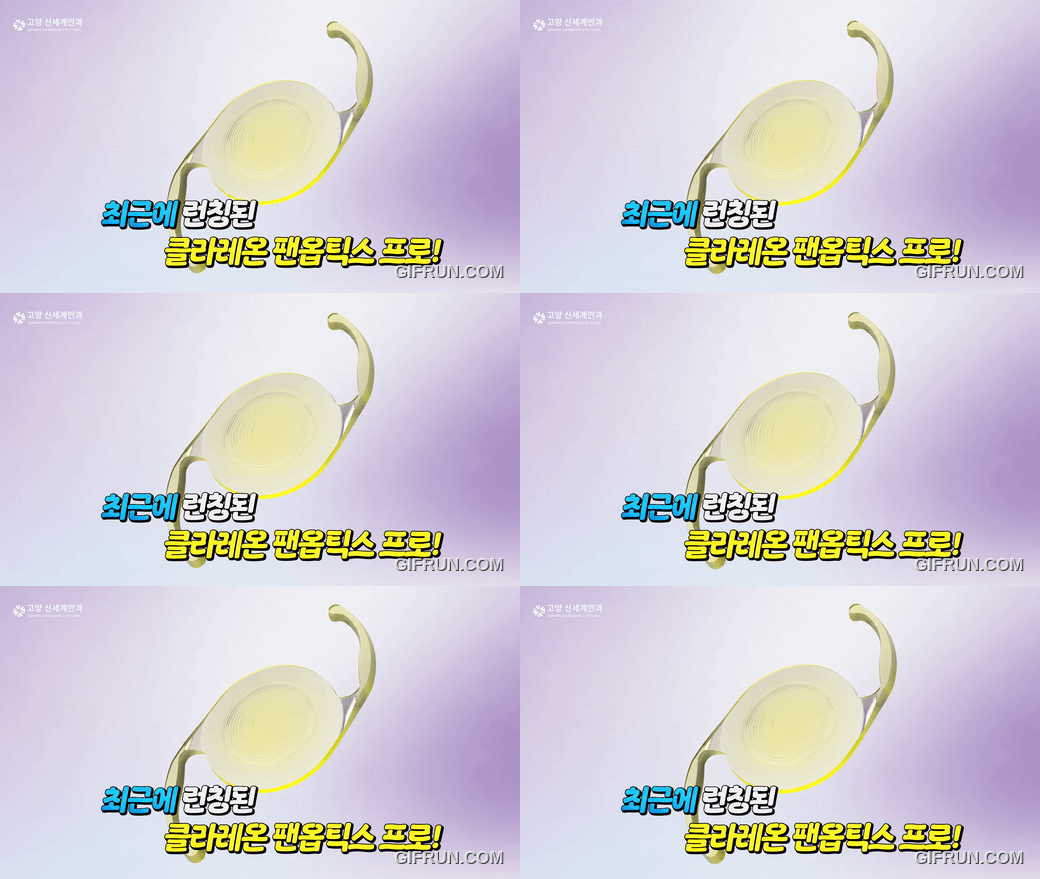
Odyssey and PanOptix Pro are among the newer multifocal intraocular lenses currently used in cataract surgery.
Odyssey was developed to provide a balanced range of vision at far, intermediate, and near distances.
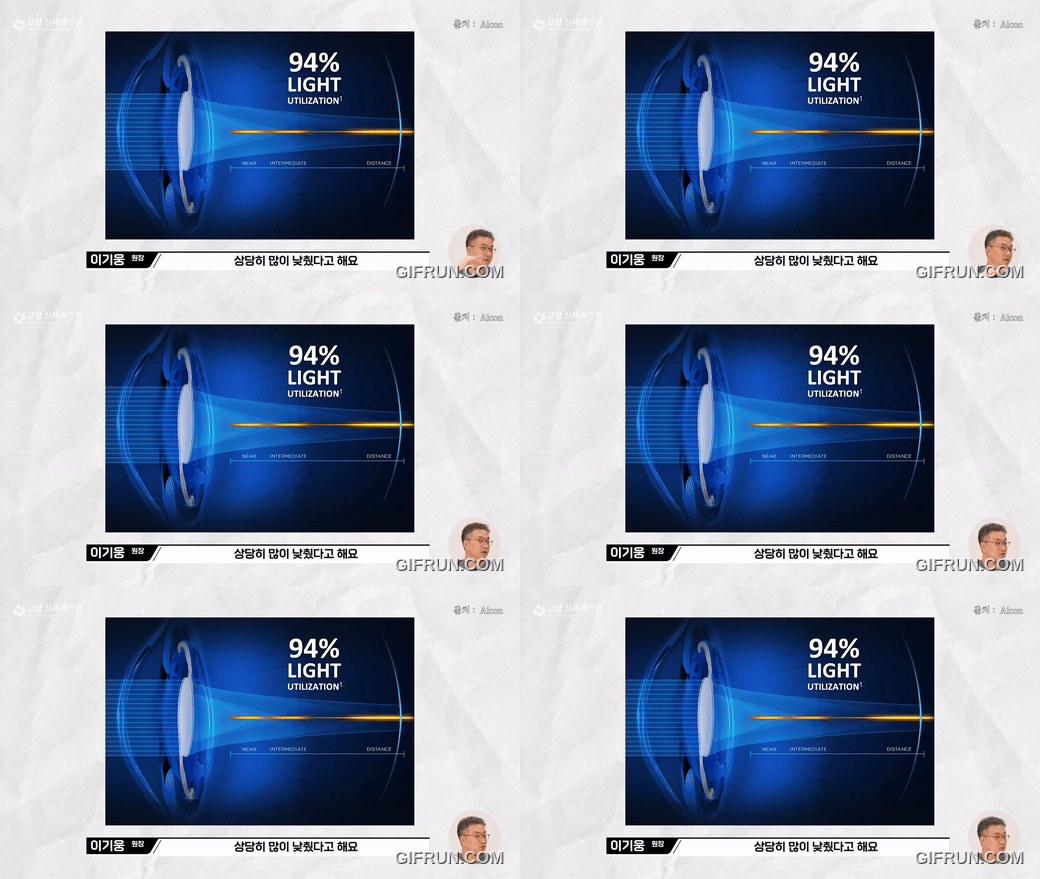
PanOptix Pro is designed with consideration for the viewing distances commonly used in everyday life, including approximately 40–60 cm.
These distances are frequently used when looking at a smartphone, working on a computer, or eating a meal.
Both lenses were developed to support convenience in daily life. However, the more suitable option depends on the condition of the eyes and the patient’s usual activities.
When searching for a recommended eye clinic in Gimpo, it is important not to choose a lens based solely on its product name. A detailed consultation can help determine which lens better suits your individual visual needs.

Q4. Which Lens Should You Choose?
The criteria for selecting an intraocular lens may vary depending on your lifestyle.
Some people drive frequently, while others spend long hours working on a computer. Some may devote more time to reading or using a smartphone.
The appropriate lens may also differ depending on whether you are active at night and what type of work environment you have.
When preparing for cataract surgery in Gimpo, it is important to evaluate not only the results of a comprehensive eye examination but also your everyday visual habits.

Q5. What Should Be Considered When Choosing a Lens?
Because an intraocular lens is intended to remain in the eye for a long time, a thorough consultation is necessary before surgery.
The following factors should be discussed during the consultation:
✔ How often you drive
✔ How much time you spend using a computer or smartphone
✔ Your reading habits
✔ Whether you are frequently active at night
✔ Whether you have any pre-existing eye conditions
These factors should be reviewed comprehensively with an ophthalmologist before selecting a lens.
At a Gimpo eye clinic, the consultation should consider not only the examination results but also the patient’s occupation, daily environment, and visual priorities.
Multifocal intraocular lenses have continued to evolve, offering patients a wider range of options.
In the past, the mix-and-match approach was sometimes used to combine lenses with different optical characteristics. Today, newer lens designs can support a broader range of everyday viewing distances, gradually changing the way cataract surgery is planned.
However, an intraocular lens should not be selected based on the product type alone.
The condition of the eyes, occupation, lifestyle, and most frequently used viewing distances should all be considered together. Evaluating these factors can help identify an option that more closely matches the patient’s individual visual needs.
Thank you.